PASSIVE DYNAMIC WALKER · γ = 4.5° · Try to drag

I'm a first-year M.S. student in Robotics at Carnegie Mellon, advised by Professor Aaron M. Johnson in the Robomechanics Lab.

I build minimally-actuated bipedal robots that walk in the real world. Right now, I'm working on a penguin-inspired biped for low-friction slopes and Mugatu, the first steerable single-motor biped. I'm targeting ICRA 2027 as co-first author. In 2026 summer, I'm joining a stealth AI company as a Physical AI intern.

Legged locomotion Reinforcement learning Optimal & predictive control Bio-inspired mechanism design Sim-to-real transfer Contact-rich dynamics

Research Statement

I want to understand how morphology and control can be co-designed so that simple, low-cost legged robots walk robustly outside the lab. I start from biology and physics to extract the minimal mechanism that makes a gait work, then close the loop with reinforcement learning in simulation and transfer policies to hardware. The goal is a tighter design pipeline from animal observation to walking machine, where the mechanism does half the work and the controller does the rest.

This work has been shaped by the guidance of my advisor, Professor Aaron M. Johnson, and years of close mentorship from Ph.D. candidates Naomi Oke and Steven Man.

News

May 2026
Joining a stealth AI company as a Physical AI intern for the summer.
Apr 2026
Invited to present a co-first-author workshop paper at ICRA 2026 in Vienna on the penguin-inspired biped.
Mar 2026
"Allometric Scaling Laws for Bipedal Robots" submitted to IROS 2026.
Jan 2026
Presented Mugatu work at the Gordon Research Conference on Robotics.
Aug 2025
Started my M.S. in Robotics at CMU, continuing in the Robomechanics Lab.
May 2025
Graduated with a B.S. in Mechanical Engineering, 4.0 GPA. CIT Leadership and Service Award.
Mar 2025
Featured as a lead undergraduate researcher in CMU's SURF grants story.

Experience

Physical AI Engineer Intern
Summer 2026
Stealth Robotics Startup · Boston, MA
  • Full-stack ownership of a mobile robot platform, with primary focus on developing RSL-RL policies to replace a model-based QP/IK posture controller, closing the sim-to-real gap and validating outdoors on untrained terrain.
  • Benchmarked reactive, recurrent and teacher-distilled architectures under one reward and observation contract; direct RL trained the recurrent policy to deployment without the two-stage distillation pipeline, cutting a stage from the standard approach.
Mechanical DesignElectronicsHardware IntegrationRSL-RLSim-to-RealRecurrent PolicyTeacher DistillationQP/IKMobile Robot

Ongoing Research

Penguin biped demo
Pengu: Macaroni Penguin-inspired Bipedal Robot
May 2025 – Present · Research Assistant, Robomechanics Lab

A 5-DOF bipedal robot with a crank-link leg extension that captures macaroni penguin inertial properties. Currently training with a CPG-RL framework for stable, biomimetic walking on viscous, slippery, and sloped surfaces.

HardwareMorphology DesignCPG-RLMuJoCoIsaac LabSim-to-Real
→ Co-first-author submission to ICRA 2027
→ Co-first-author workshop at ICRA 2026
→ Featured at NFL Draft Tech Demo Day 2026
Mugatu: A Minimally-Actuated Steerable Biped
Dec 2023 – Present · Research Assistant, Robomechanics Lab

The first steerable single-motor biped. I built a PID attitude controller for directional control and analyzed 2D contact dynamics to optimize gait efficiency and limit-cycle stability.

HardwarePIDLimit cyclesDrakeMuJoCo
→ Allometric Scaling Laws for Bipedal Robots — IROS 2026
→ GRC Robotics 2026 · NCUR 2025 · CMU MOTM 2025

Projects

Go2-W agriculture
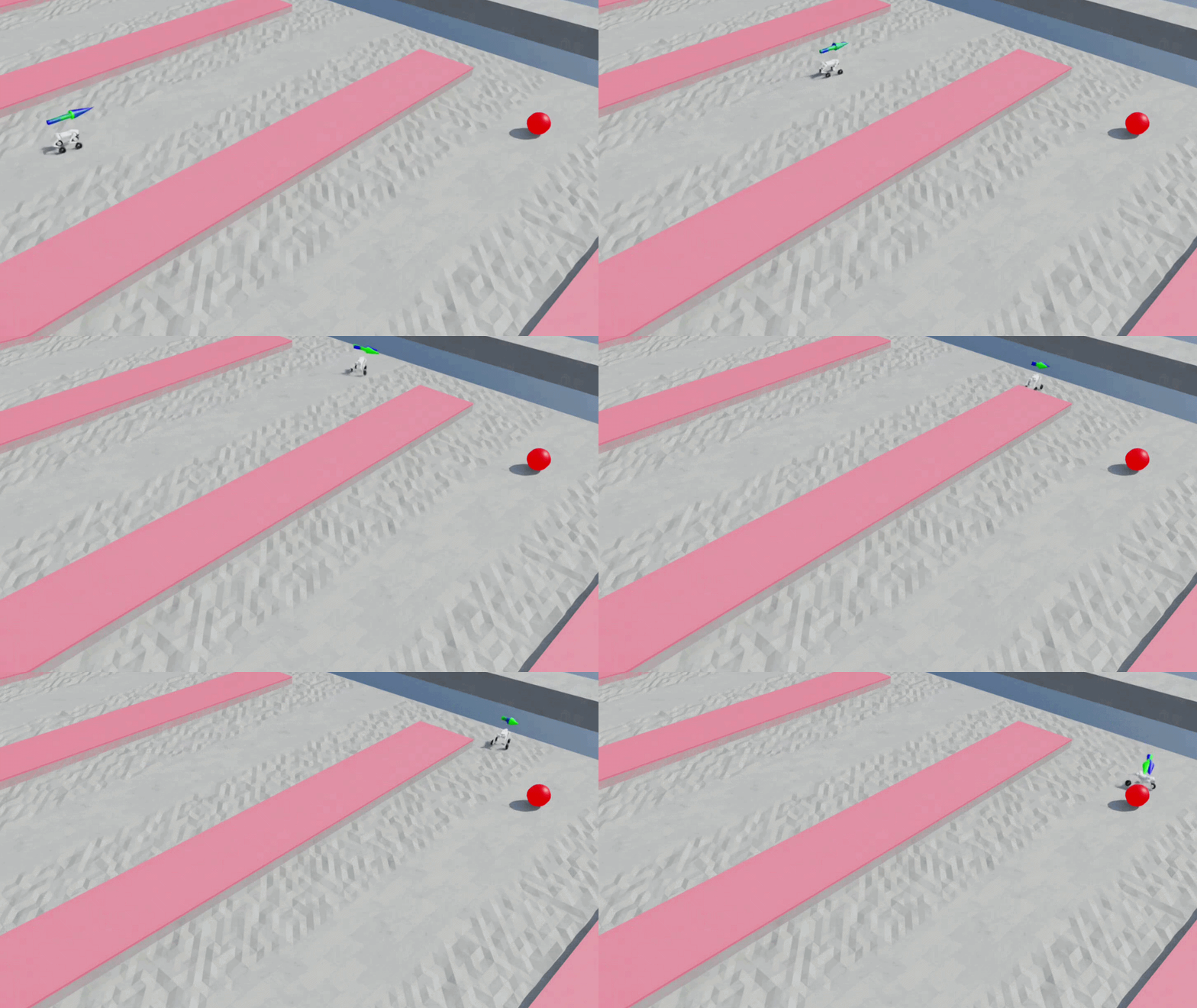
Hybrid Locomotion for Go2-W in Agriculture
Jan 2026 – Present · Robotics & AI for Agriculture · Prof. George Kantor & Francisco Yandun

A PPO policy in Isaac Lab for adaptive wheel-leg switching on the Unitree Go2-W, trained on procedurally-generated off-road terrains with multi-crop row constraints.

PPOIsaac LabWheel-LegRough Terrain
MPPI drone racing
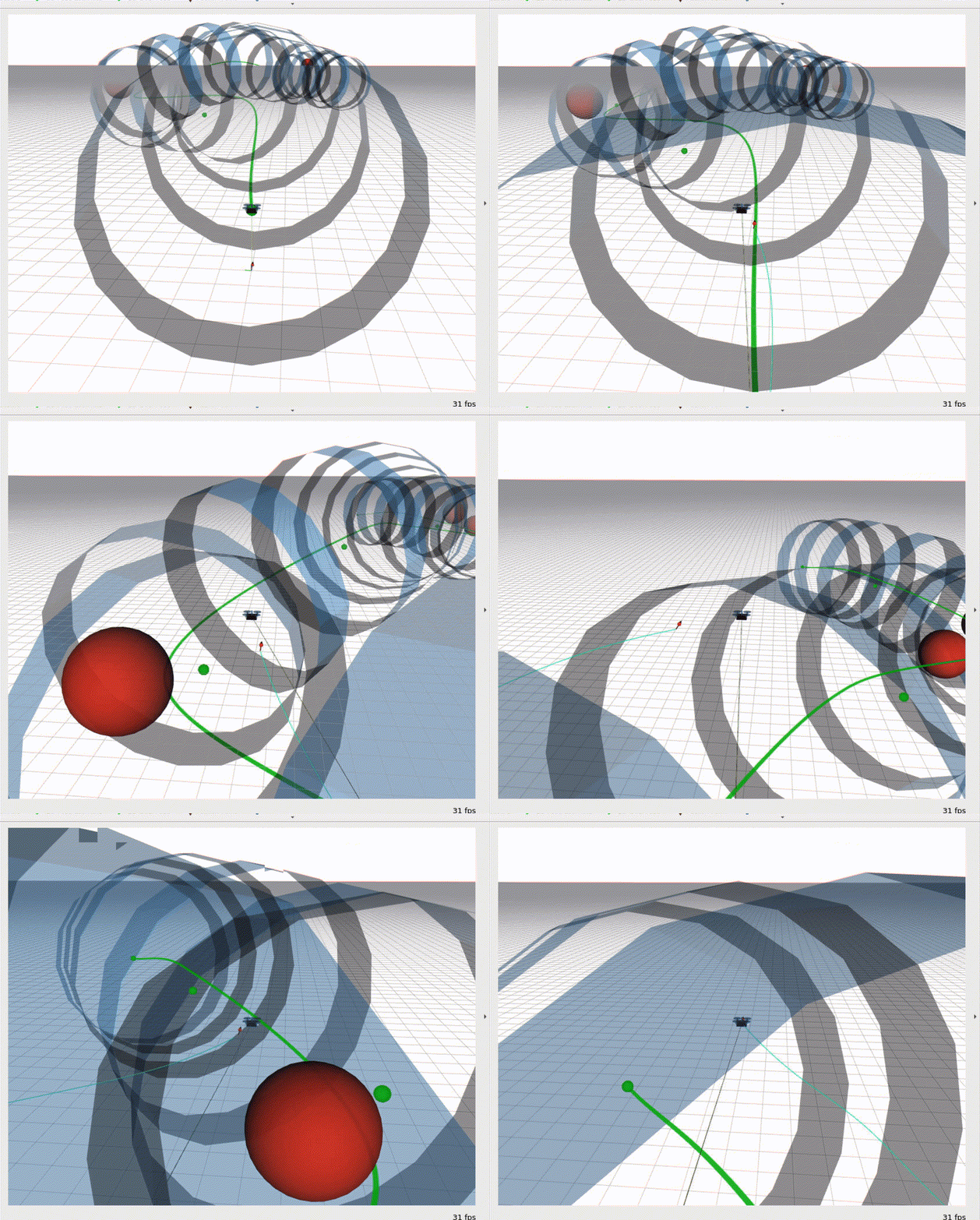
MPPI-Based Autonomous Drone Racing
Jan 2026 – May 2026 · Mobile Robots · Prof. Wennie Tabib

Real-time MPPI controller for a 17-state quadrotor model, sampling control inputs in PyBullet to balance high velocity against aggressive gate navigation.

MPPIQuadrotorPyBullet
Sim-to-Real RL: Autonomous Quadrotor Landing
Aug 2025 – Jan 2026 · Robot Learning · Prof. Guanya Shi

PPO with 4096 parallel agents and an exponentially-scaled curriculum for precision landing on moving targets. 96% success rate on Crazyflie 2.1+ hardware with <4 cm error.

PPOCurriculum LearningSim-to-RealIsaac LabCrazyflie
A1 gait transition
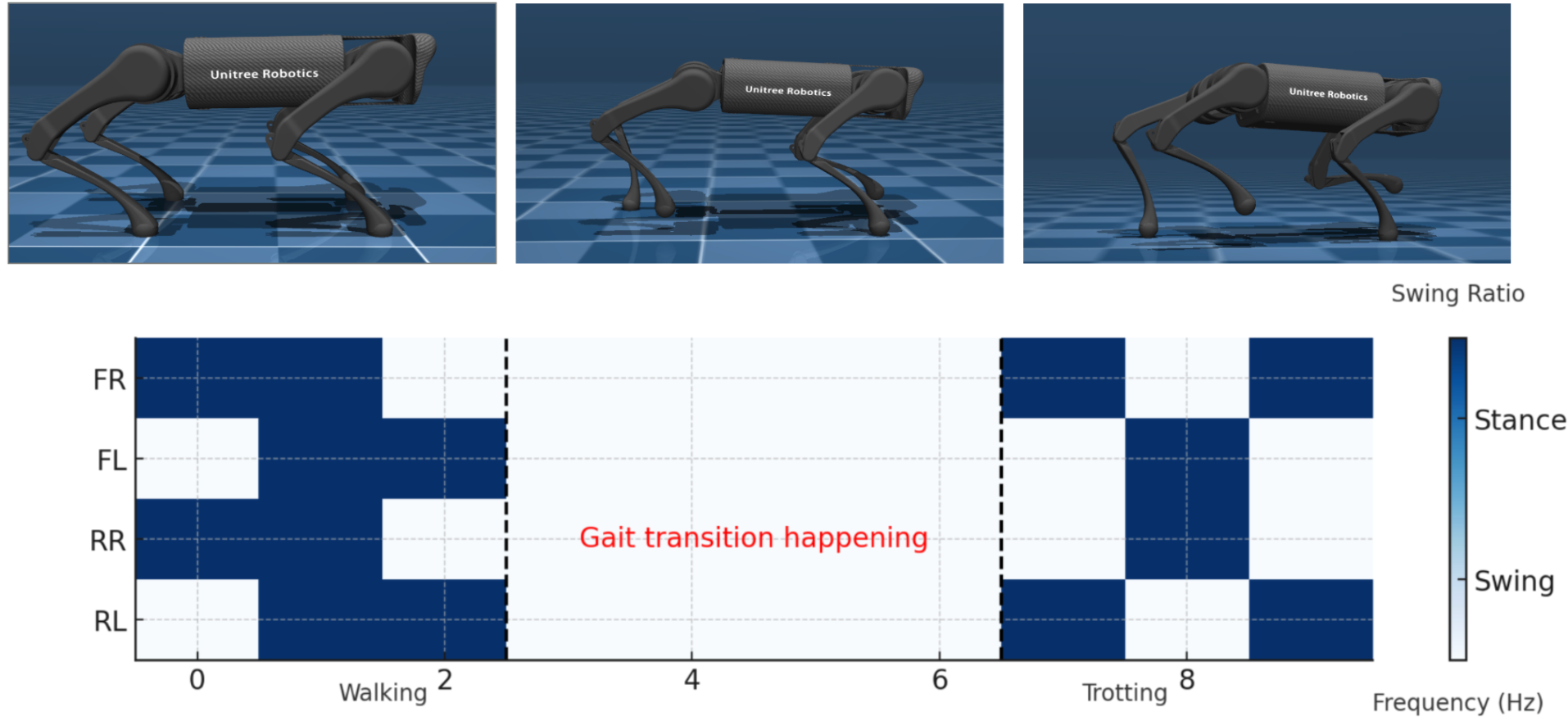
MPC-based Gait Transition for Unitree A1
Jan 2024 – May 2024 · Optimal Control & RL · Prof. Zachary Manchester

An RL + LQR controller for seamless transitions between 3 gaits within 2 seconds, using contact-implicit trajectory optimization in MuJoCo.

MPCMuJoCoLQRContact-implicit TO
PAM suspension system
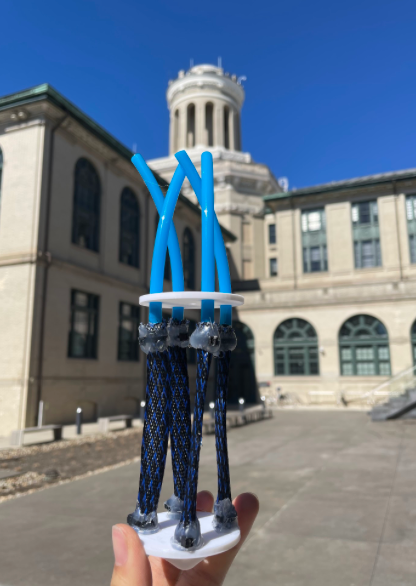
Variable Stiffness Suspension System Using Pneumatic Artificial Muscles
Spring 2024 · Soft Robotics · Prof. Carmel Majidi

Designed, CAD-modeled, simulated, and fabricated a PAM-enhanced suspension system with mode-switching and feedback control. Collected experimental data validating variable stiffness across loading conditions.

PAMSoft RoboticsFeedback ControlCADFabrication

Publications

Penguin-inspired Bipedal Locomotionin prep
B. Gu*, et al. · In preparation for ICRA 2027 (Seoul)
A Penguin-Inspired Bipedal Robot for Low-Friction Surface Walkingaccepted
N. Oke*, B. Gu*, et al. · Workshop, ICRA 2026 (Vienna)
Allometric Scaling Laws for Bipedal Robotsunder review
N. Oke, A. Carter, B. Gu, et al. · Submitted, IROS 2026 · arXiv:2603.22560
* Denotes equal contribution (co-first author).

Selected Media

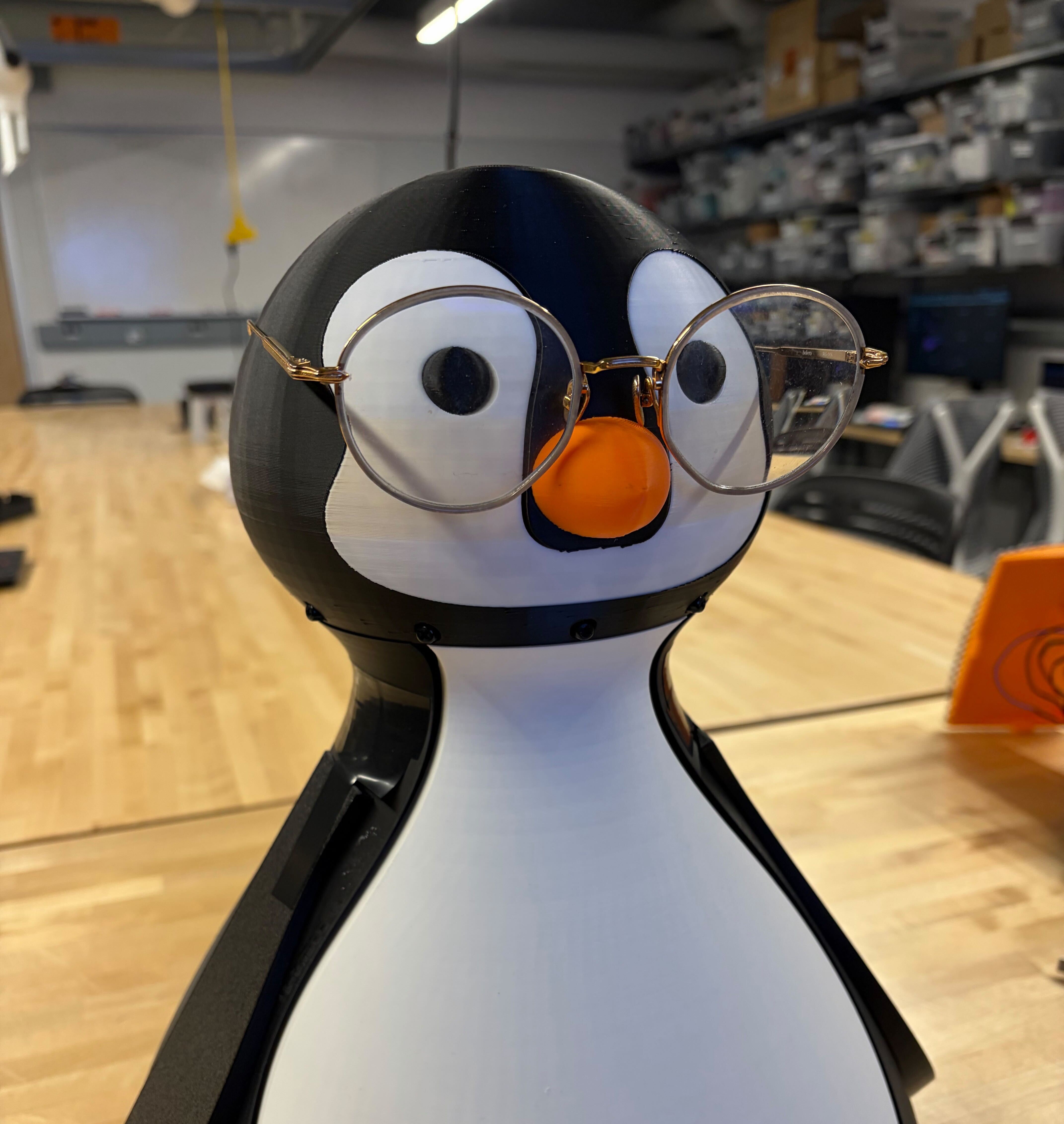
Pengu, the penguin namesake of the bipedal robot project
Pengu is cosplaying his best friend Ben
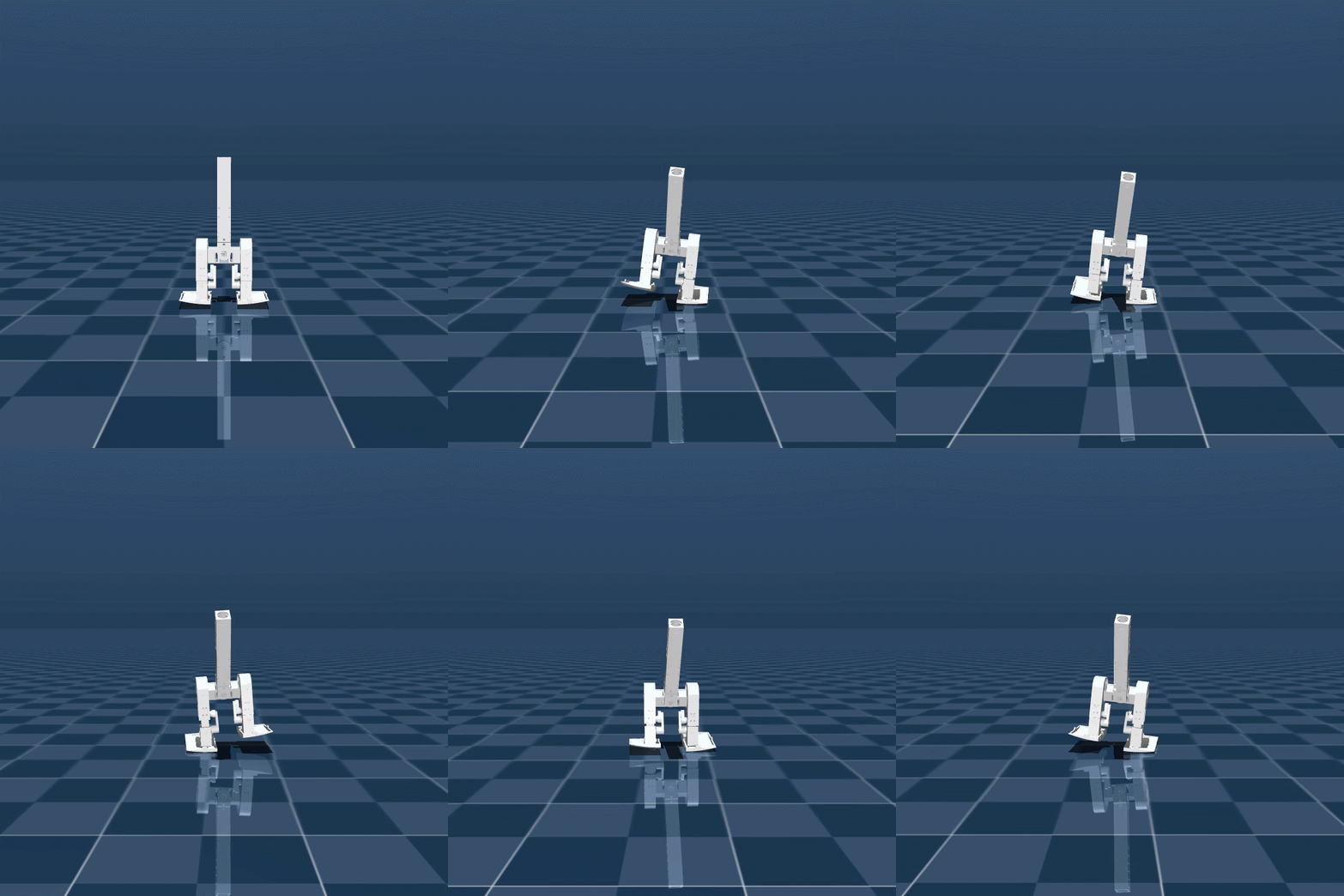
Penguin-inspired biped learning a stable gait in simulation
Pengu with a stable gait in simulation, ahead of hardware transfer.
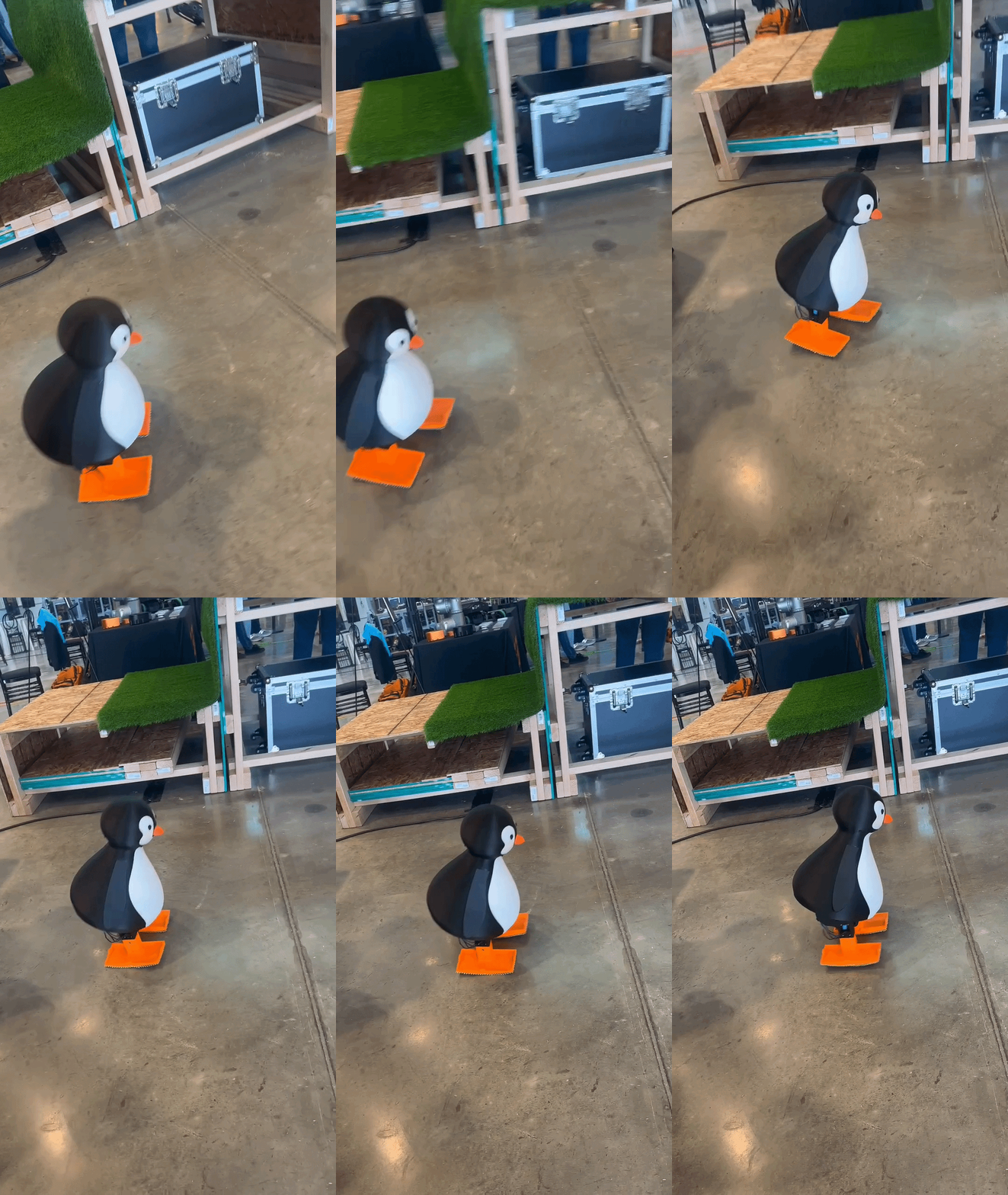
Pengu walking on hardware. Live demo at the NFL Draft Tech Demo Day Pittsburgh 2026.

Contact

The fastest way to reach me is email: bengu [at] andrew.cmu.edu. I'm always happy to chat about legged robots, RL, or sim-to-real.